What hyaluronic acid is
Hyaluronic acid (HA) is a large glycosaminoglycan polymer — a long-chain sugar molecule — that occurs naturally throughout the human body, with particularly high concentrations in joint synovial fluid, the vitreous of the eye, and skin. It was first isolated in 1934 from the vitreous humor of bovine eyes, and its remarkable viscoelastic properties — the ability to behave as both a viscous fluid and an elastic solid depending on mechanical conditions — quickly became of great scientific and clinical interest.
In the context of joint health, Hyaluronic Acid is the primary component responsible for synovial fluid’s characteristic thick, slippery consistency. The concentration of HA in healthy synovial fluid is approximately 2-4 mg/mL, and it is this concentration that gives synovial fluid its ability to lubricate joint surfaces, absorb shock, and facilitate the diffusion of nutrients into cartilage. As people age, or when joints become inflamed, HA concentration and molecular weight in synovial fluid decrease, impairing lubrication and cartilage nutrition.
Synovial fluid and joint lubrication
Synovial fluid serves two critical mechanical functions in joints: lubrication and shock absorption. As a lubricant, it dramatically reduces the coefficient of friction between articular cartilage surfaces — healthy synovial fluid provides friction coefficients far lower than any manufactured lubricant at comparable pressures. This near-frictionless gliding is entirely dependent on the presence of Hyaluronic Acid at adequate concentration and molecular weight.
As a shock absorber, HA’s viscoelastic properties allow synovial fluid to behave differently depending on the speed of applied force. Under rapid forces (like the impact of a footstep), the fluid becomes more viscous and absorbs more energy. Under slow sustained loads (like standing still), it flows more freely, redistributing pressure. This dynamic behaviour is impossible without intact, high-molecular-weight Hyaluronic Acid. When HA is degraded or depleted by inflammation, this dual function is impaired: joints experience higher friction, reduced cushioning, and increased mechanical stress on cartilage surfaces.
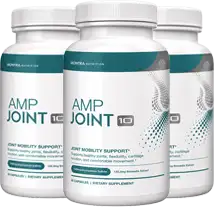
View the AMP Joint 10 formula, current pricing and the 60-day guarantee.
🧠 View AMP Joint 10Cartilage nutrition role
One of the less discussed but critically important roles of Hyaluronic Acid in joint health is facilitating cartilage nutrition. Articular cartilage has no direct blood supply — it receives all its oxygen and nutrients by diffusion from synovial fluid through the process of joint loading and unloading during movement. The composition and viscosity of synovial fluid directly affects the rate and completeness of this diffusion process.
Healthy HA-rich synovial fluid allows optimal nutrient diffusion into cartilage during movement and recovery. When HA is depleted, the diffusion environment is impaired, slowing the delivery of glucose, oxygen, and other essential nutrients to chondrocytes — the cells responsible for maintaining and repairing cartilage matrix. This nutritional deficit, compounded over time, contributes to the progressive cartilage thinning seen in degenerative joint conditions. Hyaluronic Acid supplementation supports the maintenance of synovial fluid composition that keeps this nutrient delivery pathway functional.
Clinical evidence
The use of injected Hyaluronic Acid (viscosupplementation) directly into knee joints has extensive clinical trial evidence dating back over 30 years, demonstrating significant improvements in joint pain and function. While oral Hyaluronic Acid has a different absorption route, published research has increasingly supported its oral supplementation value. A randomised, double-blind, placebo-controlled trial published in the journal Nutrition Journal found that oral low-molecular-weight Hyaluronic Acid supplementation produced statistically significant improvements in knee pain and physical function in adults with knee discomfort over 12 weeks.
A systematic review published in Nutrients examined the evidence for oral HA supplementation specifically for joint health, concluding that oral HA demonstrates clinically meaningful benefits for joint pain, mobility, and quality of life, with a favourable safety profile. The evidence base for oral HA continues to grow as more targeted trials distinguish the different molecular weight fractions and their respective absorption and bioavailability profiles.
Hyaluronic acid in AMP Joint 10
Hyaluronic Acid fills the joint lubrication and synovial fluid support role in AMP Joint 10’s 10-ingredient formula — a mechanism that none of the other nine ingredients directly address. While Glucosamine, Chondroitin, and Collagen Type II support cartilage structure, HA supports the fluid environment that cartilage depends on for both lubrication and nutrition. Its inclusion makes AMP Joint 10’s formula genuinely comprehensive: providing structural support (cartilage ingredients) and environmental support (synovial fluid through HA) simultaneously for the complete joint health picture.
More articles
More on the AMP Joint 10 blog. Official site for pricing and guarantee.