What collagen type II is
Collagen is the most abundant protein in the human body — constituting approximately 30% of total protein mass — and it exists in at least 28 distinct molecular forms, each with different structural properties suited to different tissue environments. Collagen Type II is the dominant collagen found in hyaline cartilage, the smooth connective tissue covering joint surfaces, and in the vitreous humour of the eye.
Its distinctive triple-helix molecular structure and the specific pattern of its amino acid sequences gives Type II collagen properties that other collagen types do not share: high resistance to compressive loads, the ability to integrate with proteoglycan molecules (like those produced from Glucosamine and Chondroitin), and the mechanical flexibility that allows cartilage to deform under load and recover its shape when the load is removed. Understanding why Type II collagen is included in a joint supplement — rather than the more commonly marketed Type I collagen found in skin supplements — requires understanding these structural distinctions.
Cartilage architecture
Articular cartilage is a precisely organised composite material. Its mechanical properties emerge from the interaction of two main components: the collagen fibrillar network (primarily Type II collagen) and the proteoglycan gel (primarily aggrecan, built from Glucosamine and Chondroitin). Type II collagen fibres form an intricate three-dimensional meshwork that provides tensile strength — resistance to being pulled apart — throughout the cartilage thickness. The proteoglycan molecules are trapped within this mesh, where they attract and hold water molecules through their strongly negative charges.
The result is a structure analogous to a pressurised sponge: the proteoglycans want to swell with water, but the collagen mesh constrains them, creating an internal pressure that enables cartilage to resist compressive loads far beyond what either component could achieve alone. When Type II collagen is degraded (as occurs in degenerative joint conditions), the fibrillar mesh becomes disorganised, the proteoglycan constraint is lost, and cartilage loses both its tensile and compressive mechanical properties progressively.
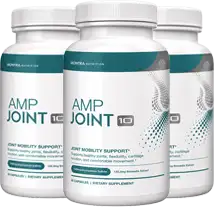
View the AMP Joint 10 formula, current pricing and the 60-day guarantee.
🧠 View AMP Joint 10Undenatured vs hydrolysed
Collagen Type II supplements come in two main forms with distinctly different mechanisms. Hydrolysed (broken down) Type II collagen provides individual amino acids and small peptides that serve as building blocks for endogenous collagen synthesis — the same mechanism as hydrolysed Type I collagen supplements. Undenatured Type II collagen (UC-II) is a patented low-temperature processed form that preserves the native triple-helix structure of cartilage-derived collagen.
Undenatured Type II collagen is thought to work through oral immune tolerance — when consumed, immune cells in the gut-associated lymphoid tissue encounter native cartilage collagen and develop tolerance to it, potentially reducing the autoimmune inflammatory response against endogenous cartilage that contributes to joint breakdown. This immune-modulating mechanism is completely distinct from the building-block mechanism of hydrolysed collagen, and several published clinical trials have specifically demonstrated UC-II’s benefits for joint comfort at doses far lower than hydrolysed collagen products require.
Research evidence
A double-blind, randomised, placebo-controlled trial published in the International Journal of Medical Sciences compared undenatured Type II collagen against glucosamine plus chondroitin combined for knee joint support in adults with knee discomfort. The UC-II group showed significantly greater improvements in overall joint discomfort, at a dose of just 40mg per day compared to the 1,500mg glucosamine plus 1,200mg chondroitin combination.
A subsequent study published in the Journal of the International Society of Sports Nutrition examined UC-II in healthy active individuals experiencing exercise-induced knee discomfort, finding significant improvements in knee extension and flexion scores compared to placebo over 120 days. The evidence positions Type II collagen as complementary to Glucosamine and Chondroitin rather than duplicative — addressing the collagen fibrillar network dimension of cartilage that the proteoglycan-focused ingredients do not directly target.
Collagen type II in AMP Joint 10
Collagen Type II occupies the cartilage fibrillar network support role in AMP Joint 10’s formula — distinct from and complementary to Glucosamine and Chondroitin’s proteoglycan-focused mechanisms. Together, these three ingredients provide comprehensive cartilage matrix support: Glucosamine for proteoglycan synthesis raw material, Chondroitin for proteoglycan hydration, and Type II Collagen for the fibrillar scaffold that gives cartilage its tensile strength and mechanical integrity. Hyaluronic Acid then provides the synovial fluid environment in which this cartilage matrix functions and receives nutrition.
More articles
More on the AMP Joint 10 blog. Official site for pricing and guarantee.